Objectives & evidence
Capability-anchored Objectives describe the change needed. Key Results provide evidence of movement, not task lists.

COMPASS / THE MODEL
An operating model for adaptive strategy execution, created by Ahmed Elnahas and brought into practice through Compaxra.
Strategic meaning can fade across layers, functions and teams—even when dashboards are green. Compass preserves direction while priorities and decisions adapt through evidence and learning.
 Discover the book
 Vision, Strategy, Capabilities, Objectives and Rhythm are connected elements, not five sequential steps.
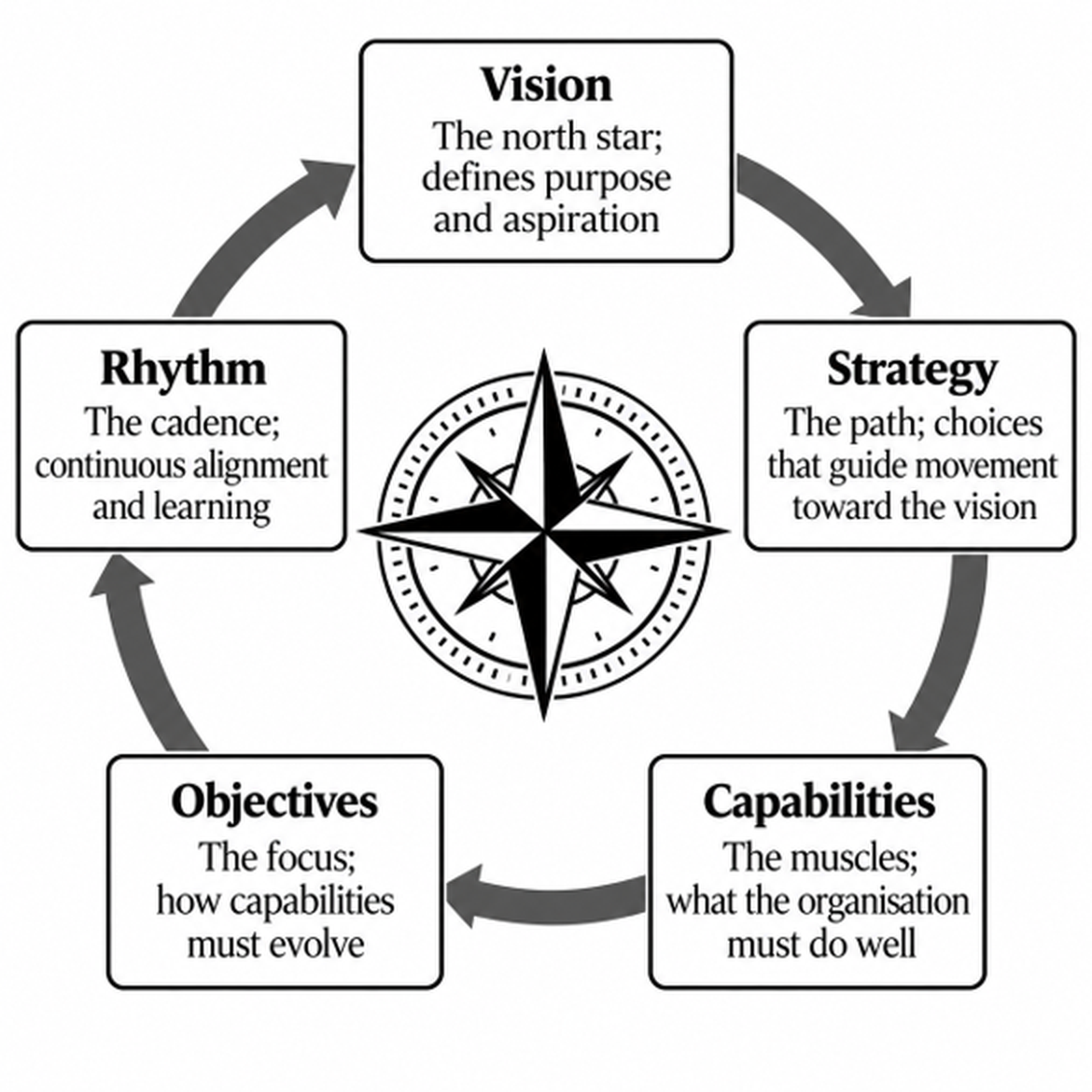
Purpose, choices, organisational ability, movement and learning form one connected system.
Open full-size diagram in a new tab ↗From Compass · © Ahmed ElnahasStrategy becomes actionable through the capabilities an organisation must strengthen or evolve. DPOT reveals their constraints across Data, Process, Organisation and Technology.
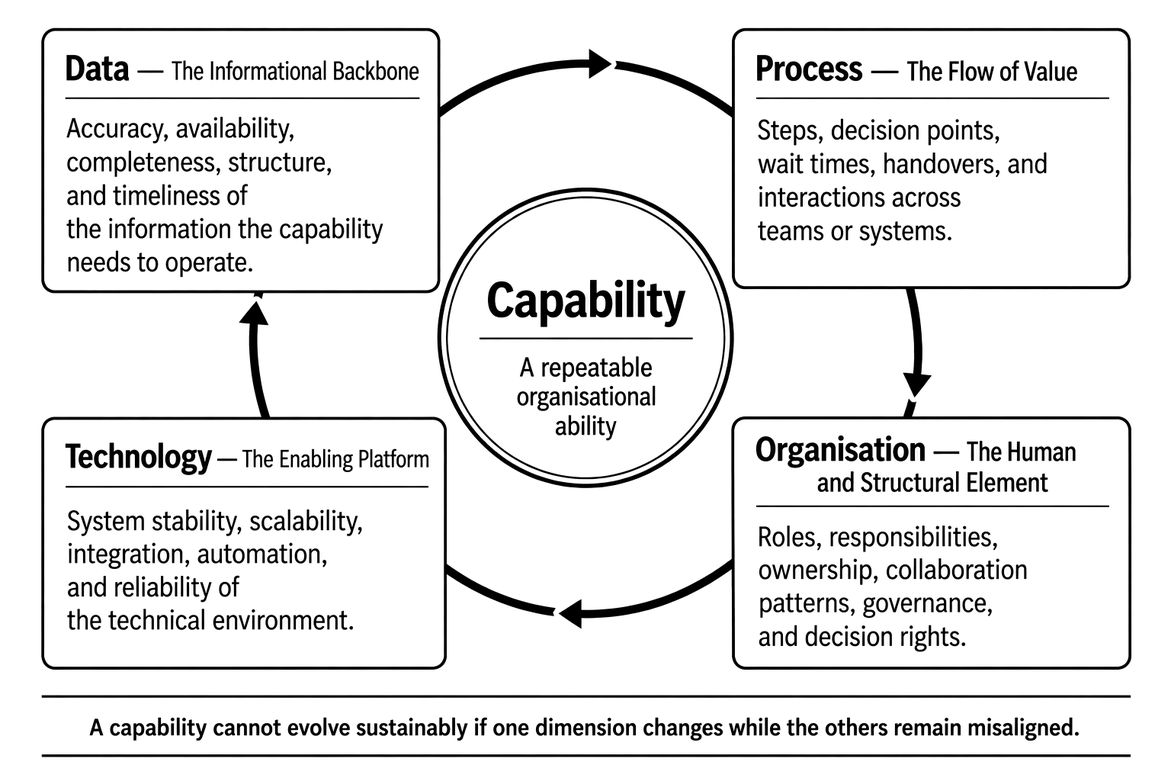
A repeatable organisational ability depends on all four dimensions working together.
Open full-size diagram in a new tab ↗From Compass · © Ahmed ElnahasDirection flows towards execution. Evidence and feedback travel back into decisions, with cascading and cadence maintaining the connection.
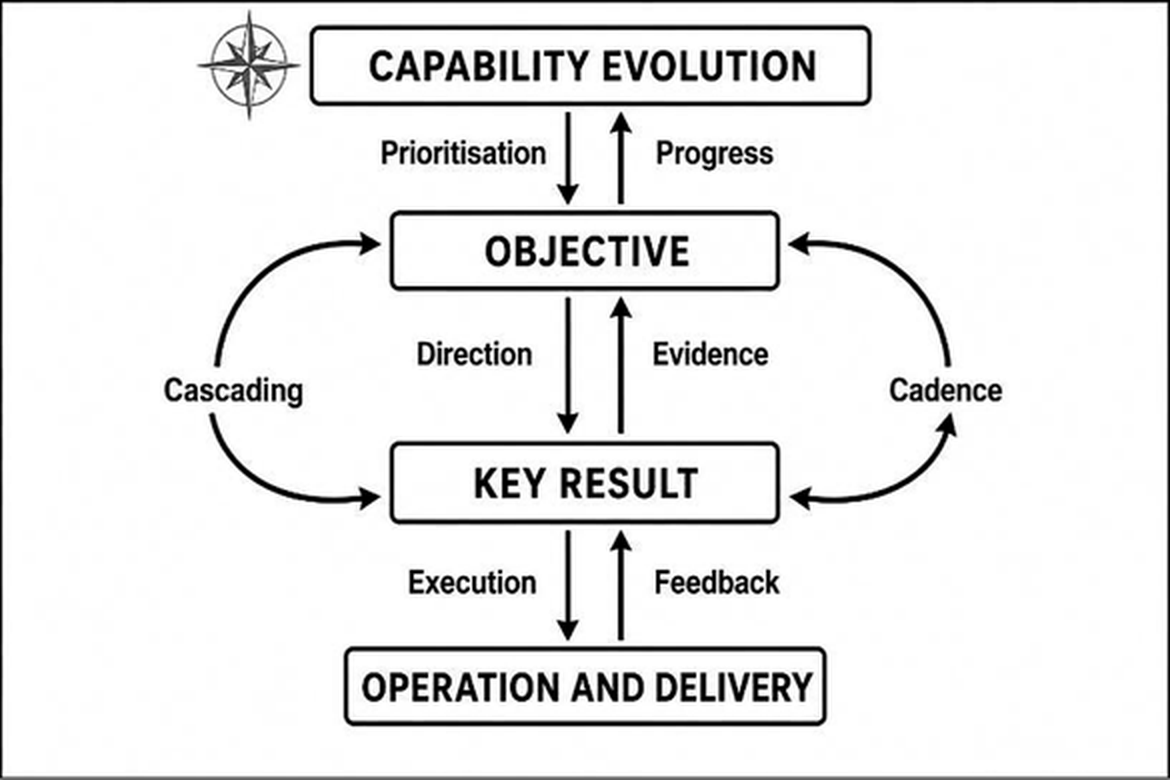
Capability evolution, Objectives, Key Results and delivery are connected through direction, evidence and feedback. The model keeps attention on what changes in the system.
Open full-size diagram in a new tab ↗From Compass · © Ahmed ElnahasConnect direction, contribution, evidence and learning—so the organisation can adjust its course without losing strategic meaning.
Capability-anchored Objectives describe the change needed. Key Results provide evidence of movement, not task lists.
Cascading invites contribution. An agreed contribution becomes a parent Key Result and, with identical wording, the contributing layer’s Objective.
Evidence shows what changed; Confidence expresses whether a Key Result remains attainable. Both inform decisions.
Regular reviews turn evidence into learning, adjusted contributions and better decisions. Where needed, OPIs support interpretation of Objective progress.